
Designed for Interoperability, Not Lock-In
AutoSymmetry connects insurers, OEMs, dealers, fleets, and service providers
through a neutral, consent-first platform
— without replacing existing systems.
Interoperability is achieved through structured signals, shared schemas,
and permissioned data flows — not proprietary control.
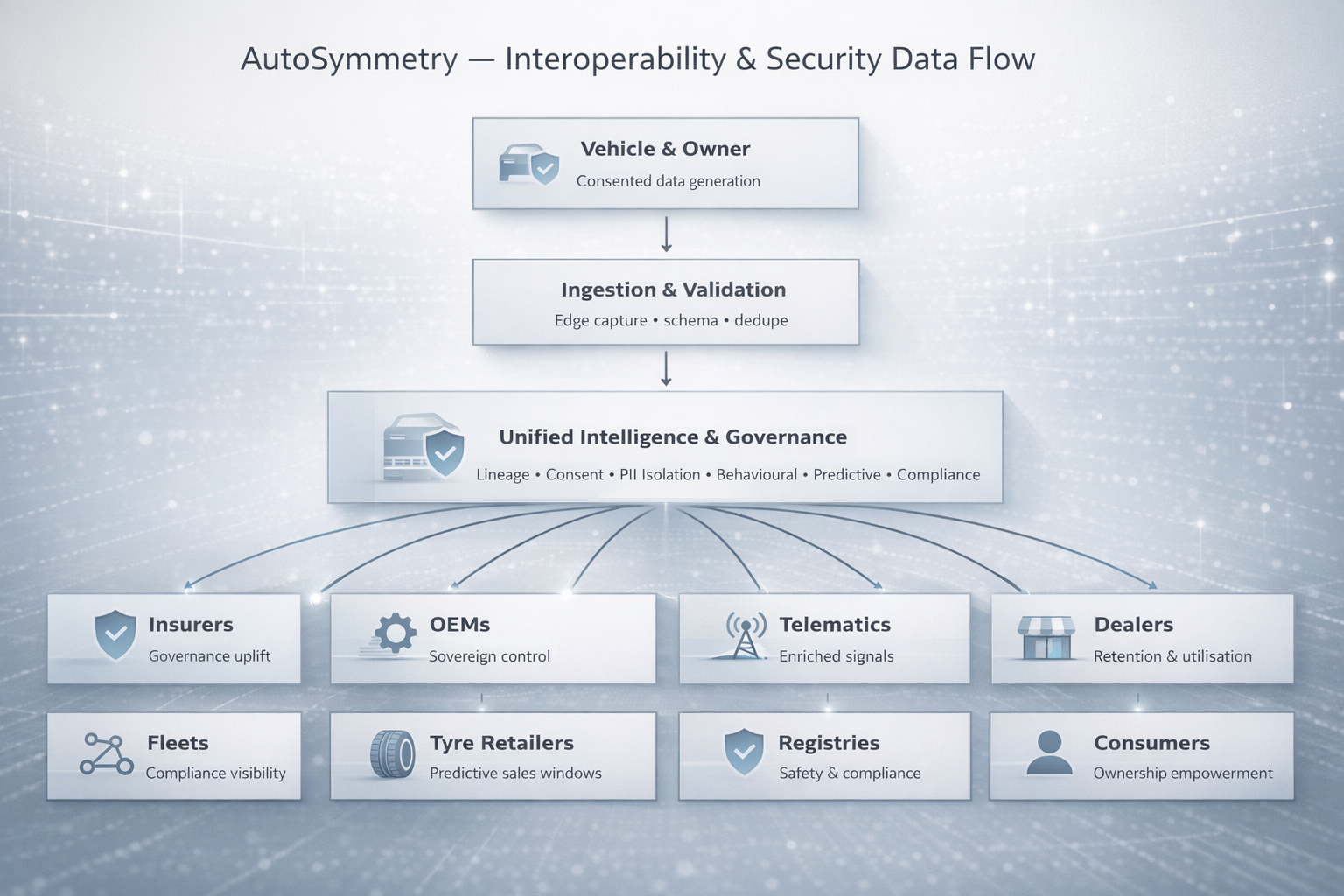
How Systems Interoperate
At a high level, interoperability occurs in three stages:
Event Occurs
A real-world vehicle event is captured
(e.g. accident, tyre condition change, service trigger).
AutoSymmetry Normalises
The event is verified, consent-checked, and converted into a structured, partner-ready brief.
Partner Receives
Each authorised partner receives a role-appropriate output aligned to their workflow.
No live system control is transferred. No proprietary data is exposed.

Interoperability by Design
Interoperability at AutoSymmetry means that each participant in the mobility ecosystem can connect to the platform without changing how they operate internally.
AutoSymmetry does not:
replace insurer systems
override OEM data ownership
act as a dealer platform
require exclusive integration
Five Principles
that Govern Every Connection
Consent-First
All data sharing is explicitly authorised by the vehicle owner or controlling party, logged, and revocable.
System-Respectful
AutoSymmetry integrates around existing systems, not into their core logic.
Schema-Based
Information is normalised into stable, documented structures before being shared.
Event-Driven
Partners receive signals triggered by real-world events, not constant data polling.
Role-Specific
Each partner receives only what is relevant to their role — nothing more.
Who Connects — and How
Insurers
- Receive structured incident and condition signals
- Integrate without changing claims platforms
- Use outputs for triage, validation,
and pilot programs
OEMs
- Receive aggregated lifecycle insights
- No raw consumer data required
- Supports connected-vehicle and ESG initiatives
Dealers & Service Networks
- Receive verified service or return triggers
- Reduce manual follow-ups
- Improve retention without CRM replacement
Fleet & Leasing Providers
- Receive compliance-ready vehicle status
- Align servicing with lease rules
- Reduce downtime and administrative load
Government / Regulators (where applicable)
- Receive non-identifying, policy-ready signals
- Support safety and compliance reporting
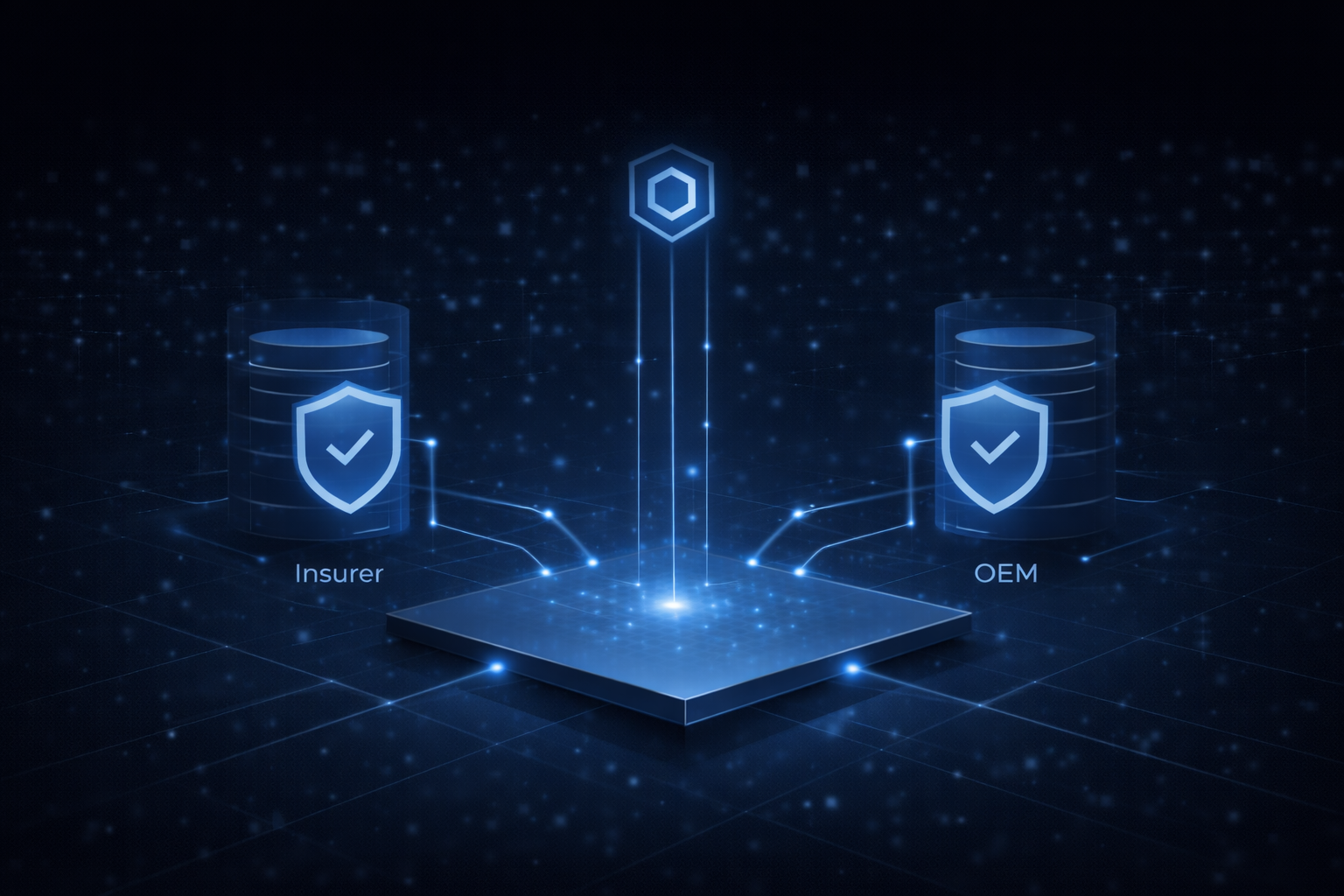
Designed to Integrate — Not Dominate
To maintain neutrality and trust, AutoSymmetry deliberately avoids:
scraping third-party systems
acting as a system of record for insurers or OEMs
forcing exclusive data relationships
locking partners into proprietary workflows
This ensures the platform remains interoperable, auditable,
and acquirer-safe.
Built for Scale, Due Diligence, and Change
Because interoperability is defined by structure rather than custom code, AutoSymmetry:
scales across markets without rebuilds
supports pilot programs without long lead times
withstands acquirer technical due diligence
remains adaptable as standards evolve
Interoperability is not a feature — it is the operating model.

Explore Interoperability
in Practice
This page describes conceptual interoperability.
No live integrations or proprietary endpoints are implied.